Click here to view this email in your browser.
|

|
|
|
|
|
September 2026: Message from the CEO

|
September has been a month of making the case, together and out loud, as we head into the final days before Budget 2027 is announced on 6 October.
Our pre-Budget campaign, "The least we can expect", is now in full swing. The Tánaiste has said that the least disabled people can expect is the same access to services and supports as everyone else. With Government having published its National Human Rights Strategy for Disabled People, and Ireland preparing for its first UN hearing on disability rights, Budget 2027 is the first real test of whether those commitments will be delivered.
Our central ask remains a recurring €55 weekly Cost of Disability payment, alongside action on services, health, housing and transport.There is still time to make a difference. Please share our posts using #TheLeastWeCanExpect and #CostOfDisability, and contact your local TDs.
New research from the Electoral Commission shows that people with severe disabilities are 13% more likely to contact their TD than people with no disability, so our community already knows the power of that direct contact. A short email in your own words, saying why these issues matter to you, carries real weight in these final days.
This month DFI also joined ten fellow umbrella bodies to meet Minister Jack Chambers as part of the sector's "Stronger Together" work. Together we represent more than 1,000 organisations employing over 50,000 people. We made the case that the community and voluntary sector is a partner in delivering public services, and that it needs funding that reflects the real cost of that work, including the new cost of pension auto-enrolment.
This month's member spotlight shows why that matters. Acquired Brain Injury Ireland's Step Ahead Plus has helped 35 people into full-time roles, well over double what was expected at this stage, yet it still has no long-term funding.
I'm also pleased to announce our new partnership with the Neurological Alliance of Ireland and the HSE. The project will make sure people with lived experience, and the voluntary organisations that support them, have a real say in how the National Neuro-Rehabilitation Strategy is put into practice.
A few dates to note. Submissions to the Disability Act review close on 9 October, the same day applications close for our Policy Advocacy Manager role, so please share it across your networks. Later in the month, Ireland's EU Presidency hosts a High Level Conference on Persons with Disabilities on 22–23 October, and we are working on a number of disability-related events for teh presidency here in Ireland.
As always, I look forward to continuing our work together.
Kind regards,
|

Elaine Teague CEO
Disability Federation of Ireland
|
|
|
|
|
|
|
|
|
|
Spotlight
|
|
|
"The least we can expect": Countdown to Budget 27
|
|
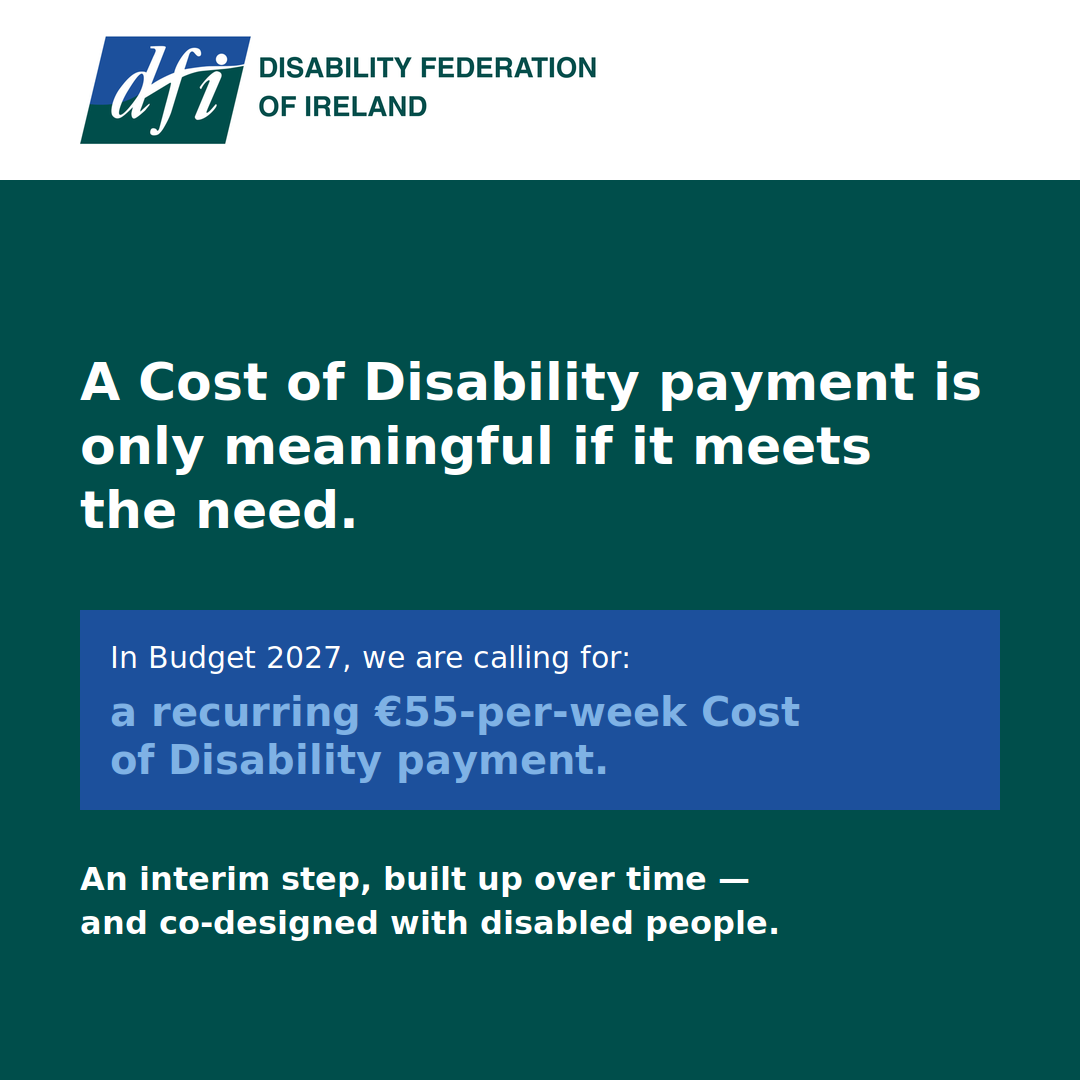
Budget 2027 will be announced on 6 October. We are calling on Government to introduce a recurring Cost of Disability payment and to act on housing, health, transport and the services disabled people rely on. There's still time to add your voice.
The Cost of Disability
Living with a disability in Ireland costs more. Medication, transport, heating, equipment and home adaptations add up to extra costs that are there every day. Disabled people face between €11,046 and €15,617 in extra costs every year, and the Disability Allowance remains more than €100 a week below the poverty line. Almost one in five disabled people lives in poverty.
Those costs are rising, and the ones disabled people can least avoid are rising fastest. According to the CSO, in the 12 months to August 2026 home heating oil rose by 44%, electricity by 8% and transport by 5%.
Last year's Budget withdrew one-off supports without replacing them, leaving many disabled people worse off. Government has committed to a Cost of Disability payment, and Budget 2027 is the moment to deliver it. As a first step, we're calling for a recurring payment of €55 a week, so that support is there all year round and not only through once-off measures.
Beyond the payment
The extra costs of disability don't come from one place, and they can't be solved by one Department. Our Pre-Budget Submission sets out what's needed across every area of life.
Services and the organisations that deliver them
Two-thirds of disability services are delivered by voluntary organisations, many on behalf of the State but without funding for the full cost. With costs rising and new pension auto-enrolment obligations on the way, many are under serious pressure. We're calling for sustainable, multi-annual funding so these services can keep going, and for investment in the therapy and support teams people wait far too long to see.
Healthcare
Disabled people deserve the same access to GPs, hospitals and health services as everyone else. We're calling for investment to remove the barriers that still stand in the way.
Transport and community life
Getting to work, college, education, appointments, meeting family and friends, or a night out depends on transport that works for everyone. We're calling for accessibility and universal design to be built into all public investment from the start, including proper investment in accessible transport.
Housing
More than 1,200 disabled people under 65 are living in nursing homes, and many disabled adults depend on family carers who are themselves getting older. We're calling for investment in accessible, affordable homes so disabled people can live independently in their communities.
A fair and open Budget
We're also calling for a transparent, accessible Budget announcement that shows how decisions affect disabled people, and for proper funding for Disabled Persons' Organisations so disabled people can participate in decision-making.
Why now?
Government has published its National Human Rights Strategy for Disabled People, and Ireland is preparing for its first UN hearing on disability rights. Budget 2027 is the first real test of whether those commitments will be delivered.
How you can help
Share our campaign. Follow DFI on social media and share our posts over the coming days using #TheLeastWeCanExpect, #Budget2027 and #CostOfDisability.
Contact your local TD. Send your local TDs a short email telling them who you are, where you live and why these issues matter to you, and ask them to support a recurring Cost of Disability payment in Budget 2027. You can find your TDs at oireachtas.ie.
The Tánaiste has said that the least disabled people can expect is the same access to services and supports as everyone else. Budget 2027 is the chance to make that real.
Read our full Pre-Budget Submission.
|
|
|
DFI takes the Cost of Disability to the streets
|
|
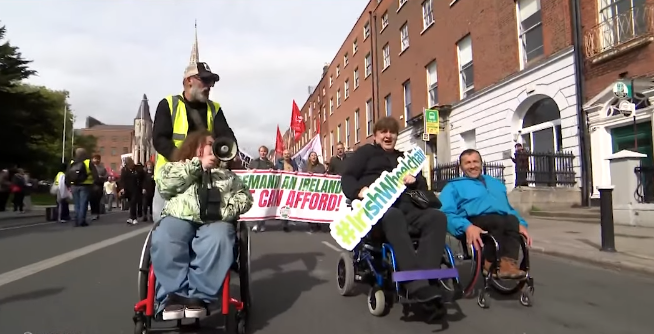
With Budget 2027 now weeks away, DFI has stepped up the pressure for a Cost of Disability payment.
On 19 September, DFI marched through Dublin alongside fellow members of the Affordable Ireland campaign, backed by a coalition of trade unions, to put cost-of-living concerns front and centre. Our message was was that a Cost of Disability payment has been promised for a long time, and a commitment only becomes real when it's delivered.
Disability Allowance currently comes to €254 a week, while DFI estimates the extra costs of living with a disability run to between €488 and €555 a week. As our Director of Advocacy, Emer Begley, told the Irish Examiner, there is still uncertainty over whether any payment will be set at an adequate level, and when it will actually be introduced.
Emer also flagged concern about the language now being used by some in Government. When ministers talk about "economic responsibility," she noted, the implication is that any payment introduced will be modest. What's needed is a permanent, recurring payment, based on need and targeted to those who need it most.
Heading into winter, many disabled people face higher energy bills simply to power essential equipment such as electric wheelchairs and adapted beds, and to keep their homes warm for longer. Emer warned that some people have been in energy arrears since last winter, and that the numbers may be higher again this year.
How you can help
The closer we get to Budget 2027, the more it matters that this message is heard everywhere. You can help by sharing our campaign on social media and contacting your local TDs.
Read the Irish Examiner coverage here.
|
|
|
Join our team: We're looking for a Policy Advocacy Manager
|
|
Good news! We've extended the deadline to apply for our Policy Advocacy Manager position at DFI to Friday 9 October.
Our mission is to work alongside our members, disabled people, allies and the state to drive full inclusion and equity. We aim to build an Ireland where disabled people shape their own lives and take part in their communities with equality, inclusion and independence.
We're looking for someone to help lead that work.
That's why we're recruiting a Policy Advocacy Manager to join our team at a genuinely pivotal moment for disability policy in Ireland. Working closely with our Director of Advocacy, this person will lead our dedicated policy team and help deliver DFI's policy programme.
What you'll do:
- Lead analysis of disability-related public and social policy
- Influence policy development and represent DFI at a high level
- Build strategic relationships with government, statutory agencies and civil society
- Engage our members to keep their voices at the heart of our
- work.
The details:
- Permanent, full-time | €55,000–€60,000
- Based in Dublin City Centre, with flexible hybrid working
- Closing date: 9 October 2026.
DFI is an equal opportunities employer, and we particularly welcome applications from disabled people.
Reasonable accommodations are available throughout the recruitment process.
To apply, send your CV and cover letter to jobs@disability-federation.ie.
Full details of the role are here.
|
|
|
Supporting lived experience and voluntary organisation engagement in the National Neuro-Rehabilitation Strategy
|
|
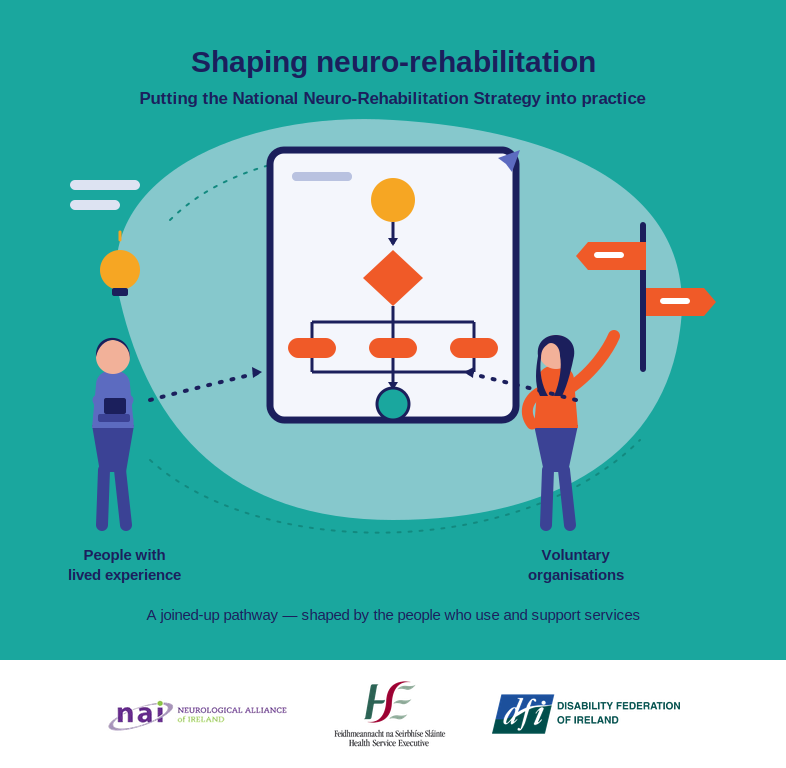
Disability Federation of Ireland (DFI), Neurological Alliance of Ireland (NAI) and the HSE are partnering on a new project. Its aim is to make sure that people with lived experience, and the voluntary organisations that support them, have a real say in how the National Neuro-Rehabilitation Strategy is put into practice.
Neurorehabilitation is the range of therapies and supports for people living with neurological conditions, whether sudden onset such as stroke or brain injury, or progressive, like multiple sclerosis or Parkinsons. It aims to help people achieve the best possible outcomes through person-centred care, delivered as close to home as possible.
The people who use neuro-rehabilitation services should help to shape how those services are provided. It’s also important to hear from voluntary organisations. They help join up specialist care and community services into one clear pathway for people who use them. This project is about making sure both groups are heard, are involved in developing and delivering services. It’s also about giving them the support they need to take part.
The project grows out of earlier partnership work between DFI, NAI and the HSE. The Neuro-Mapping Project which ran from 2022 to 2025. It mapped community neuro-rehabilitation services across several regions. It also listened to people with lived experience and service providers about what was working well and what wasn’t. It found a clear need for services that are joined up, fairer, and easier to access, and it further highlighted the critical role of people with lived experience in shaping those services.
This new project carries that learning into the next stage, focusing on putting the strategy into practice.
To start, the partners will look at how people currently take part in the national and regional groups that guide the strategy, and how well those arrangements are working.
They will then design and roll out better ways for people to get involved. This will be based on what people with lived experience and voluntary organisations tell them, good practice, and lessons from similar work elsewhere in health and disability services.
The project has two connected parts. The first is about people with lived experience.
It covers:
-
keeping people better informed and supported
-
creating clear and accessible materials
-
finding better ways to include people with communication or cognitive needs
-
offering places on the national and regional groups fairly and openly.
The second part is about voluntary organisations.
It covers:
This is a one-of-a-kind project that could directly shape how national policy is put into practice. We hope it will teach us a great deal about how to involve people with lived experience in neuro-rehabilitation in a meaningful way.
Recruitment for the Project Officer role is now complete, and Aoife Kirwan has joined and is in post. Aoife will be attending upcoming meetings to introduce herself, with more detail on the role and next steps to follow. She'll be in touch in due course as the project progresses.
|
|
|
Actioning Advocacy
|
|
|
Community and voluntary sector makes united case to Minister ahead of Budget 2027
|
|
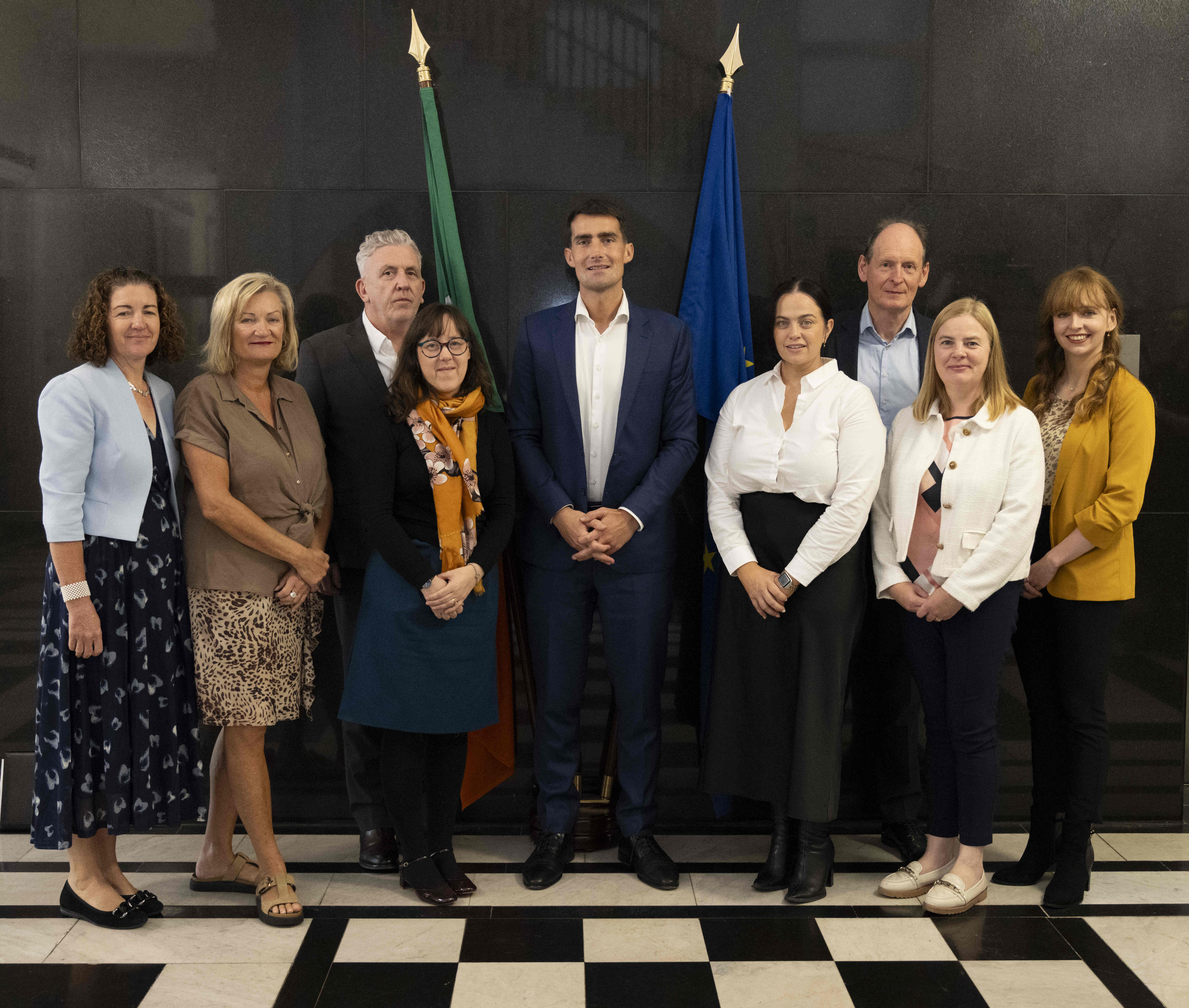
DFI joined ten fellow umbrella bodies from across the community and voluntary sector this week to meet the Minister for Public Expenditure, Infrastructure, Public Service Reform and Digitalisation, Jack Chambers, ahead of Budget 2027.
The meeting was part of the sector's shared "Stronger Together" work, coordinated through the Coalition of Community and Voluntary Service Providers. Together, the eleven organisations represent more than 1,000 not-for-profit bodies employing over 50,000 people, delivering essential services in disability, mental health, homelessness, child and family services, domestic and sexual violence, addiction and home care.
The Coalition highlighted that the community and voluntary sector is a partner in delivering Ireland's public services, not a supplement to them, and it needs a funding model that reflects the real cost of that delivery.
A central concern raised was the cost of pension auto-enrolment. The new My Future Fund scheme, which began on 1 January 2026, is a welcome step for workers' long-term financial security. However, for organisations funded by the State to deliver its services, the employer contributions represent a significant new cost with no dedicated funding attached. Without dedicated funding, the Coalition cautioned, a welcome reform risks destabilising the very services people depend on.
The organisations also called for a genuine whole-of-government approach to funding the sector, warning that inconsistent interpretations across departments and agencies undermine the services the State relies on.
Read DFI CEO Elaine Teague's reflection on the meeting and the power of collaboration.
Who's in the coalition?
The Coalition of Community and Voluntary Service Providers was initially formed in 2023. It includes bodies funded under Section 56, Section 39, 10 and 40 Service Level Agreements and comprises representatives from the following umbrella organisations:
- Coalition of Tusla Funded Grantees
- Disability Federation of Ireland
- Dublin Homeless Network (National Special Purpose Group)
- Family Resource Centres National Forum
- Mental Health Reform
- National Community Care Network
- National Federation of Voluntary Service Providers
- National Voluntary Drug and Alcohol Sector
- Network of Cuan Funded Organisations
- Simon Communities of Ireland
- The Wheel.
|
|
|
|
|
|
Members Newsfeed
|
|
|
"It gave back meaning to my life": Aquired Brain Injuries Ireland's Step Ahead Plus programme
|
|
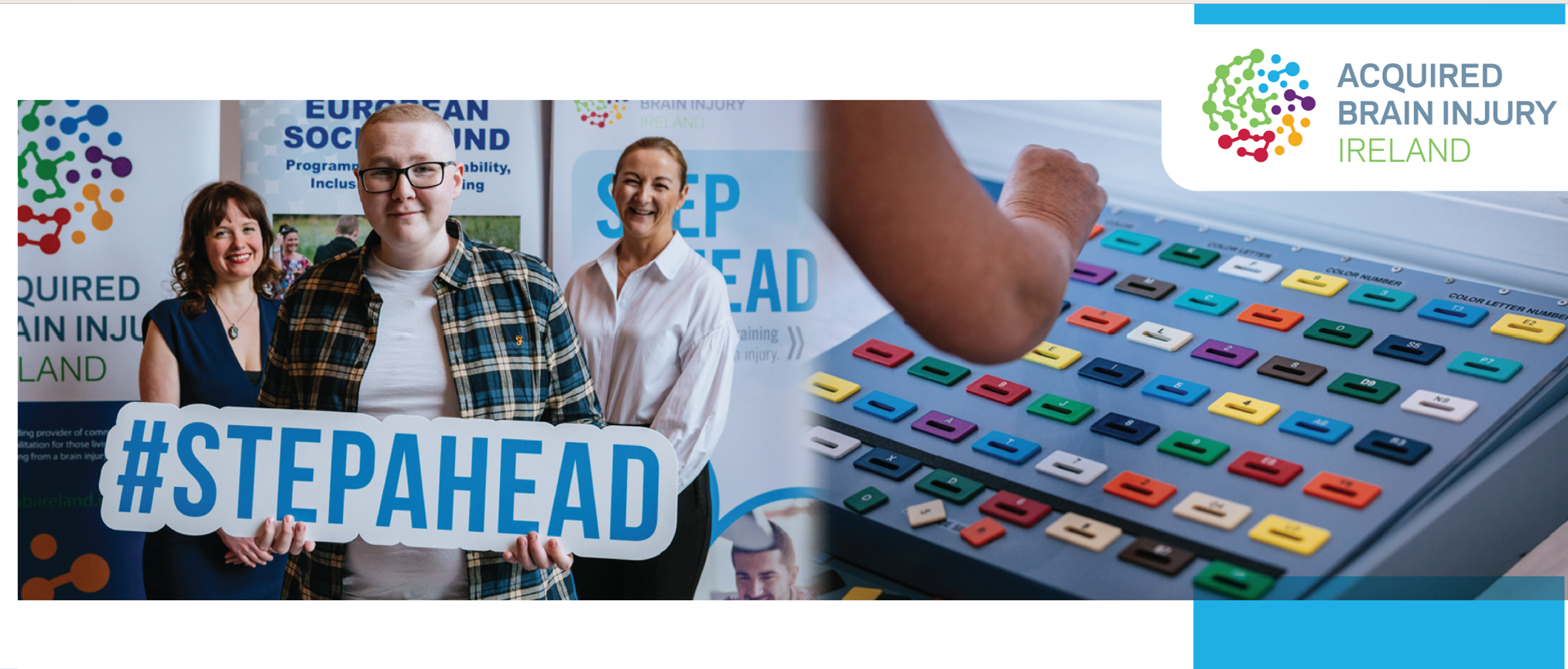
DFI member, Acquired Brain Injury Ireland's Step Ahead Plus is a free, national service that helps people with an acquired brain injury return to work, training and third-level education. The service is led by occupational therapists and delivered online. It is producing strong results, but it still has no long-term funding.
An estimated 52 people acquire a brain injury in Ireland every day, and for many of them, getting back to work or study is one of the hardest parts of recovery. Step Ahead Plus supports survivors aged 16 and over anywhere in the country. It runs separately from ABI Ireland's community rehabilitation services and has its own referral process. A small, mostly part-time team delivers the service over Microsoft Teams.
Three routes back
The service has three tracks. Fast Track supports people who are struggling in work or education, or who have a role to go back to. New Track is for people who are unemployed and ready to explore their next steps. Employer Track works with employers to develop inclusive work placements and deliver brain injury awareness training.
Fast Track places are prioritised by urgency. People at risk of losing a job or college place come first, then those due to return within six months, then those whose return is further off. The list is reviewed weekly, so an estimated return date is key to getting people seen at the right time.
To support people while they wait, the team has launched a Digital Advice Service offering personalised factsheets by email, a self-directed fatigue management course and signposting to other supports.
Other new developments include a four-week Strategies for Education group for senior cycle and university students, tiered employer engagement, a Workability Support Scale measure, and a pilot employer course for which the team is seeking CPD accreditation.
The results so far
Step Ahead Plus is funded under Workability 2024–2028, co-funded by the Government of Ireland through the Department of Social Protection and the European Union. By the end of August 2026:
- the programme hadworked with 179 people with disabilities, 95% of the number it expected to reach by the end of the year.
- thirty-five participants have moved into full-time roles, well over double the 13 expected at this stage
- 55 have completed non-accredited training, against a target of 26.
- a further 42 have secured part-time work.
The economic case is strong too. Between January and August, 14 participants moved from Illness Benefit, Disability Allowance or Jobseeker's Allowance into employment. That is an estimated saving to the State of €171,000 a year, equal to around 85% of the programme's €200,000 annual funding, before counting the wider personal and social benefits.
In participants' words
Those benefits come through clearly in feedback. "This service completely changed my life," said one participant. "Returning to work didn't seem possible at first after my injury." Another said simply: "I would not have been able to return to work without this service. It is absolutely vital."
One survivor described feeling isolated, overwhelmed and unable to see a way forward after a life-changing brain injury. With consistent support and practical strategies, they regained their confidence, learned to manage their symptoms and returned to work 17 months later. "I firmly believe I am in employment today, rather than relying on disability supports, because of the support I received," they said.
Looking ahead
Despite these results, Step Ahead Plus has no long-term funding and is constantly seeking new funding streams. The team's priorities for the future are to secure long-term funding for the online programme, develop an in-person service to meet demand in the community, extend eligibility to people with wider neurological and neuro-rehabilitation needs, reach underserved populations, and build sustainable pathways into employment, training and community participation.
Making a referral
Step Ahead Plus accepts referrals from professionals and self-referrals from anywhere in Ireland. Participants need a primary diagnosis of acquired brain injury, must be medically stable and aged 16 or over, with no upper age limit, and will need to provide proof of age. People referring themselves should include a document confirming the diagnosis, such as a medical report or discharge letter. People with concussion and 16 to 18-year-olds are considered case by case.
Because the service is online, participants need a laptop or tablet for video calls, and need to be able to use it themselves or have someone to help. The service isn't suitable for people with alcohol-related brain injury or progressive conditions such as Parkinson's or Alzheimer's disease.
Find out more about the Step Ahead Plus programme here.
|
|
|
|
|
|
|
|
|
|
|
|
Political participation and disability
|
|
A new report from the Electoral Commission looks at political participation and inclusion in Ireland.
The findings highlight some important issues for disabled people.
Analysis from 2002 to 2023 found that people with a severe disability were 10% less likely to vote than the general population.
However, people with severe disabilities were 13% more likely to have contacted their local TD than people with no disability. People with any disability were 7% more likely to have contacted their local TD.
The findings are relevant to the implementation of the UN Convention on the Rights of Persons with Disabilities (UN CRPD), including the right of disabled people to take part fully in political and public life.
Read the report and findings.
|
|
|
New ESRI research highlights rise in child poverty
|

|
New research from the Economic and Social Research Institute (ESRI), published with Community Foundation Ireland, shows a significant increase in child poverty in 2024.
The research found that 200,000 children (17.4%) were living in households below the poverty line in 2024. This was almost 30,000 more children than in the previous year.
This increase happened even though average household incomes rose by 4% between 2023 and 2024, after taking account of inflation, household size and household composition.
Child poverty was higher when housing costs were included. In this measure, 260,000 children (22.7%) were affected.
The research also found that 10% of children under 16 missed out on essentials, including school trips, leisure activities and new clothes.
Children in large families, jobless households and supported rental housing were more likely to experience material deprivation.
Read the full report here.
|
|
|
|
|
|
|
|
Events and Consultations
|
|
|
Save the date: An EDF and DFI event on housing and disability
|
|
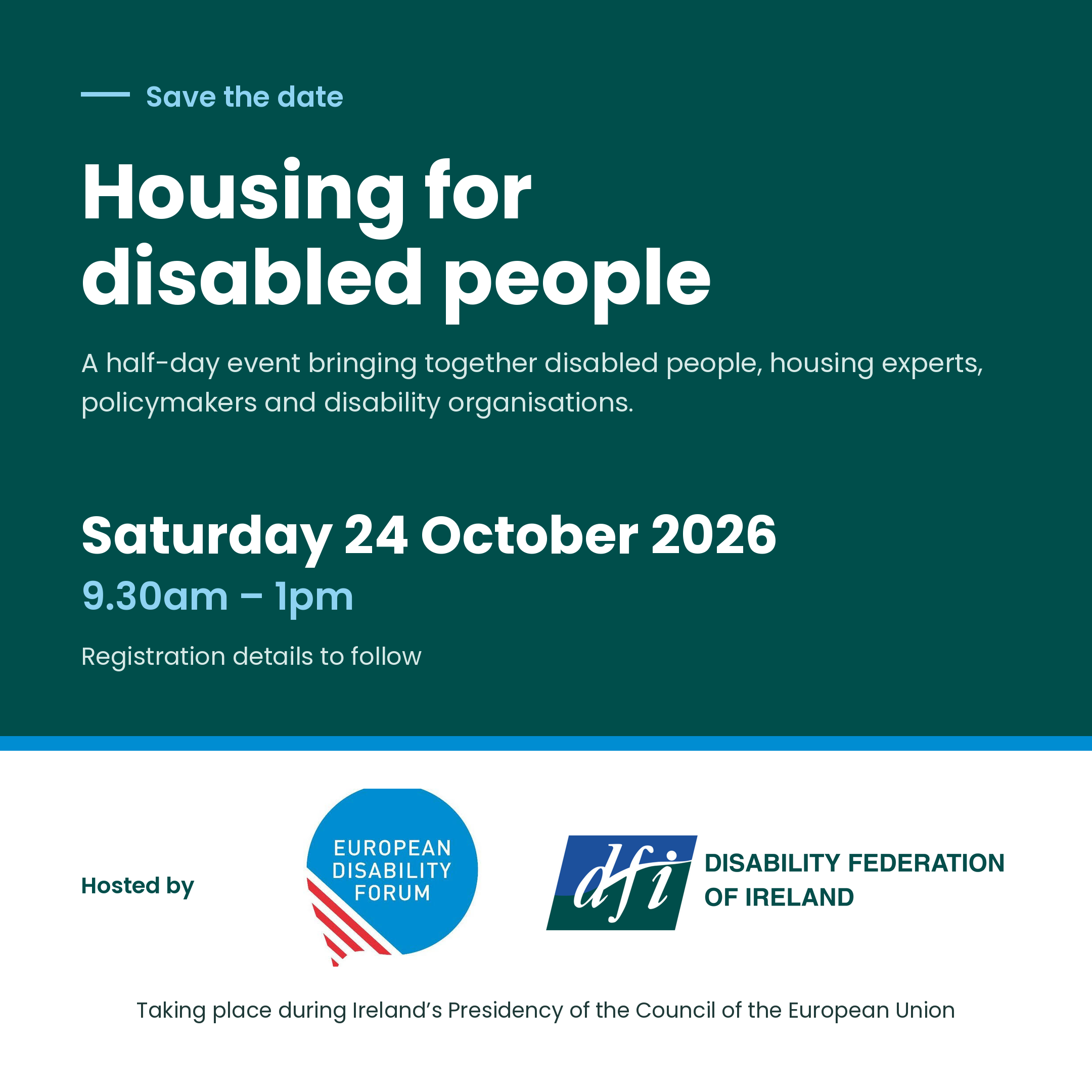
The European Disability Forum (EDF) and Disability Federation of Ireland (DFI) are hosting a half-day event on housing for disabled people on Saturday, 24 October 2026 from 9.30am until 1pm.
The event will bring together disabled people, housing experts, policymakers and disability organisations to talk about the challenges people face in finding affordable, accessible and suitable homes.
The programme will include:
- Speakers from Ireland and Europe
- Personal experiences from disabled people
- Interactive workshops
- Discussion on the cost of disability and housing
- Independent living and support in the community
- Making new and existing homes more accessible
- A discussion on practical actions for Ireland and Europe
The event takes place during Ireland’s Presidency of the Council of the European Union and will look at how we can make sure housing policy works better for disabled people.
Registration details will follow shortly.
Please save the date and share it with colleagues and others who may be interested.
|
|
|
Have your say on accessible and inclusive tourism
|
|
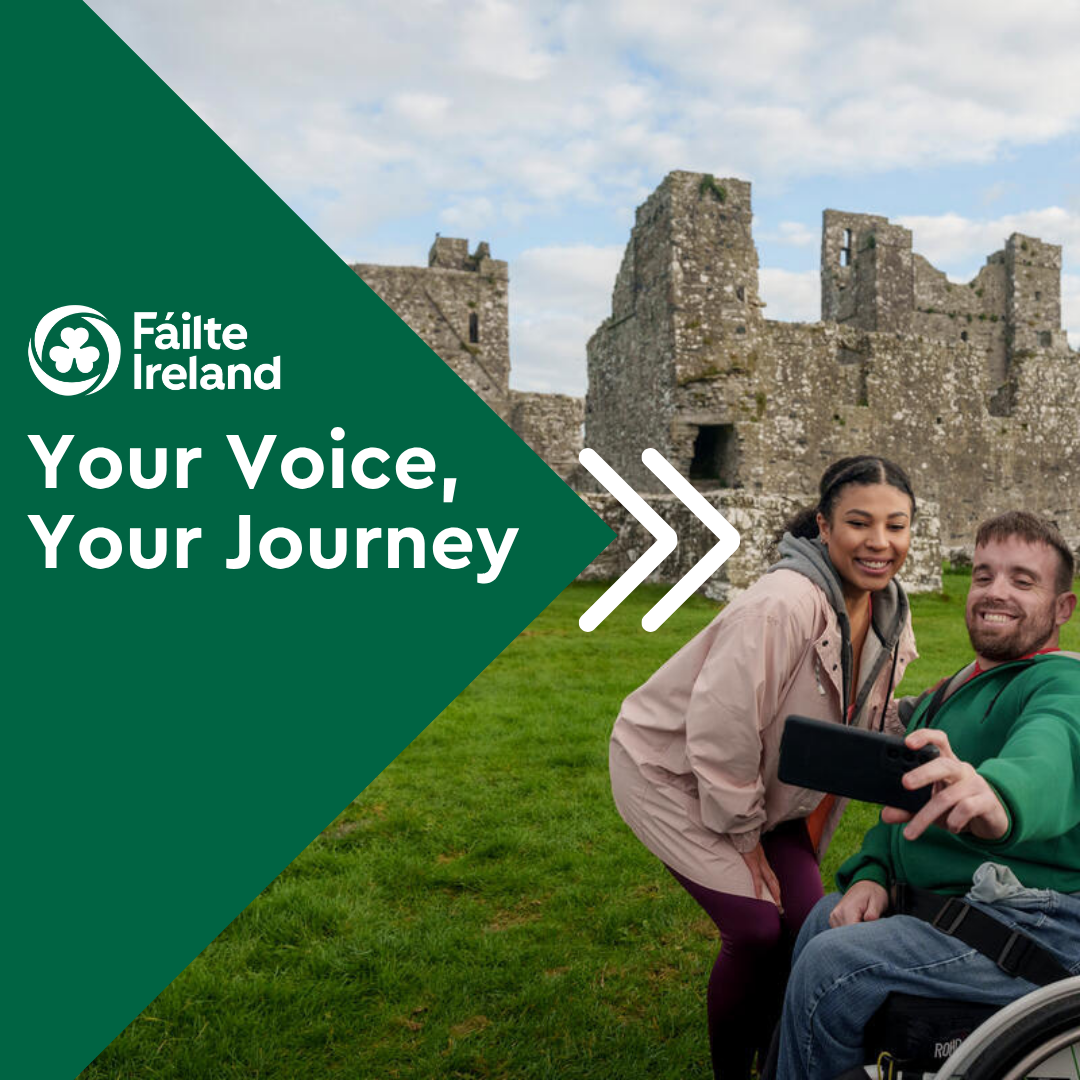
Fáilte Ireland is asking people across Ireland to take part in its Your Voice, Your Journey consultation.
The consultation looks at people’s experiences of accessible and inclusive tourism in Ireland.
It covers areas including:
- Planning and booking trips
- Transport
- Accommodation
- Attractions
- Visitor experiences.
The feedback will help identify barriers and priorities for improving accessible and inclusive tourism. It will also help inform future tourism planning.
The consultation was co-designed with national organisations representing disability, sensory impairment, age-friendly and access and inclusion interests.
The survey is open until 29 October 2026.
Please share the consultation with your members, colleagues, friends and family and encourage people to take part.
Find out more and take part in the Fáilte Ireland consultation.
|
|
|
Public consultation on Disability Act review still open
|
|
The Minister for Children, Disability and Equality, Norma Foley, and Minister of State for Disability, Emer Higgins, have launched a public consultation to inform a review of the Disability Act 2005. This is the first update to the Act in over 20 years.
Disabled people, their families, carers and representative groups are invited to submit their views, experiences and expertise as part of the process.
The review will examine the Act in light of Ireland's obligations under the United Nations Convention on the Rights of Persons with Disabilities (UNCRPD), which Ireland ratified in 2018. It will also consider the Programme for Government commitment to place an autism strategy on a legislative footing.
The Disability Act covers a wide range of areas including the definition of disability, assessment of needs, accessible public buildings, universal design, employment, and the use of genetic data.
Submissions are open until 9 October 2026 and are accepted in writing (email or post), as well as audio and video format. Accessible formats are available including ISL video, Easy-to-Read, screen reader-friendly and braille on request.
Consultation events will follow later in 2026, alongside international research into good practice on embedding UNCRPD obligations into domestic law.
Find out more about the Act and submission process.
|
|
|
BoardMatch Live: Meet Your Next Board Member – in one evening!
|
|
Looking to strengthen your board with passionate and skilled Board Members?
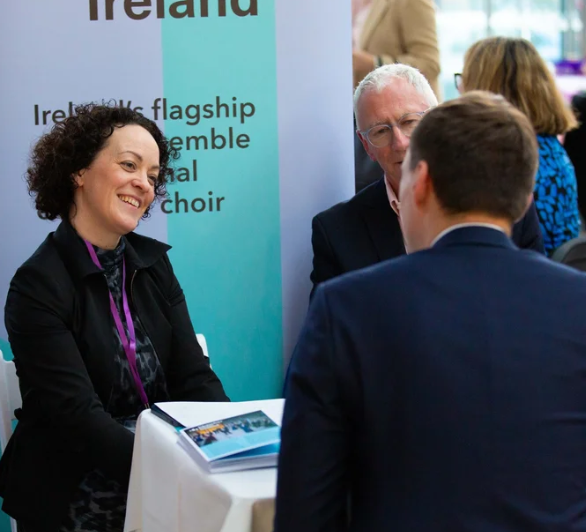
BoardMatch Live is Ireland’s only face-to-face board recruitment event for charities and not-for-profits, on Wednesday, 14 Oct at Chartered Accountants Ireland offices, 47 Pearse Street, Dublin 2
Formerly known as Charity Trustee Speed-Dating, this event connects you directly with skilled professionals who are interested in joining a charity board.
If you find a match at the event, your new Board Member qualifies for a Free place on our Governance Training Programme.
Reserve your table today. Price €150 per table.
Price includes attendance for two representatives from your organisation.
|
|
|
Have your say: Shaping the future of adult literacy in Ireland
|
|
Do you work to promote social inclusion or support people with unmet literacy, numeracy or digital literacy needs? SOLAS wants to hear from you.
Organisations and community groups across Ireland are invited to contribute to the mid-term review of the Adult Literacy for Life (ALL) Strategy, a chance to reflect on progress so far and help shape what comes next.
About the ALL Strategy
Launched in 2021, Adult Literacy for Life is a 10-year, whole-of-government and whole-of-society strategy to improve adult literacy, numeracy and digital literacy across Ireland. Its goal is simple but ambitious: to ensure every adult can participate fully in society and reach their potential, while tackling the barriers that lead to exclusion, isolation and stigma.
Now at the halfway point, the strategy is undergoing an independent review to assess what's been achieved and inform the next phase of delivery. SOLAS has appointed independent consultancy Three Sixty Insights to carry out this work.
What the review will do
The review will:
-
assess progress against the actions set out in the strategy
-
identify key achievements and challenges, and consider whether the strategy's objectives, targets and measures remain fit for the years ahead
-
evaluate how well governance and oversight structures are supporting implementation.
Why your voice matters
Input from organisations working directly with affected individuals and communities is essential. Your experience ensures the review reflects real-world challenges, priorities and insights, not just numbers on a page. Together, these contributions will help build a more inclusive Ireland where everyone has the opportunity to develop the skills they need to take part fully in society.
How to take part
Consultation is open throughout August and September 2026. There are two ways to contribute:
Questions?
For more information about the review, contact:
|
|
|
Access Media: A series on Disabled Representation in the Irish Media
|

|
Calling all media and communications professionals!
Would you like to learn more about how you can make Irish media more inclusive when it comes to the representation of disabled people?
The Disability Participation News Hub are delighted to once again join forces with Disabled Women Ireland, with the support of Coimisiún na Meán, to raise awareness about how disabled people are represented in Irish media, and how we can all play a part in creating change.
Our Access Media Series aims to connect you with disabled people working behind the scenes, on our screens, and across all forms of media, on the challenges and opportunities in accessing and working in these spaces, and what can be done to further inclusion and representation.
Sessions will take place online from July to November 2026, featuring webinars and panels where you can learn more on the following topics. There are two sessions of the five remainign so make sure you register:
- Session 4: Representation of Disabled People in Irish Film, TV and Broadcast Media
- Session 5: Misinformation and Disinformation in the Media – The Impact on Disabled People.
ISL interpretation will be available for each session.
Register via Eventbrite and spread the word with your networks!
Keep an eye on social media for speaker updates and highlights.
This series is supported by Coimisiún na Meán.
|
|
|
Call for papers: ISBA 2027 Conference, Galway
|
|
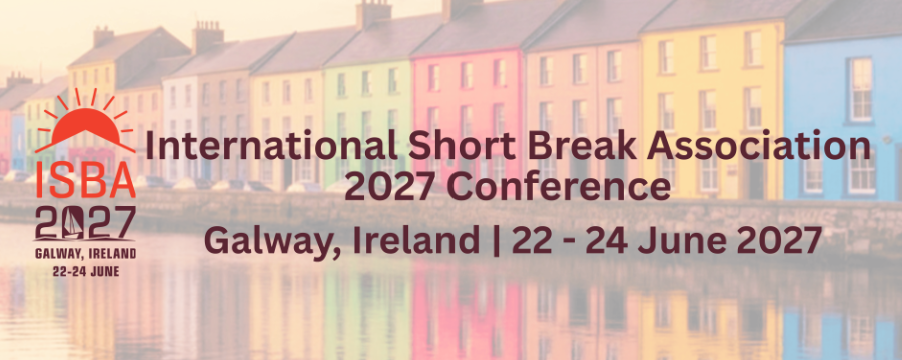
DFI member Ability West has launched the call for papers for the International Short Break Association (ISBA) 2027 international conference, bringing together voices from across research, practice and lived experience.
Date: 22–24 June 2027
Venue: Galway, Ireland
Submission deadline: 23 October 2026.
About the conference
The conference will explore how respite can be a bridge to opportunity, inclusion and connection, supporting individuals and families at every stage of life.
Who can submit
Submissions are invited from:
- Researchers and practitioners
- Individuals and families with lived experience
- Community partners and organisations.
Ability West is looking for insights on innovation, inclusion and real-life impact, to help shape the future of support systems.
Submit your abstract.
|
|
|
Together in Purpose: A conference on personal growth for social impact
|
|
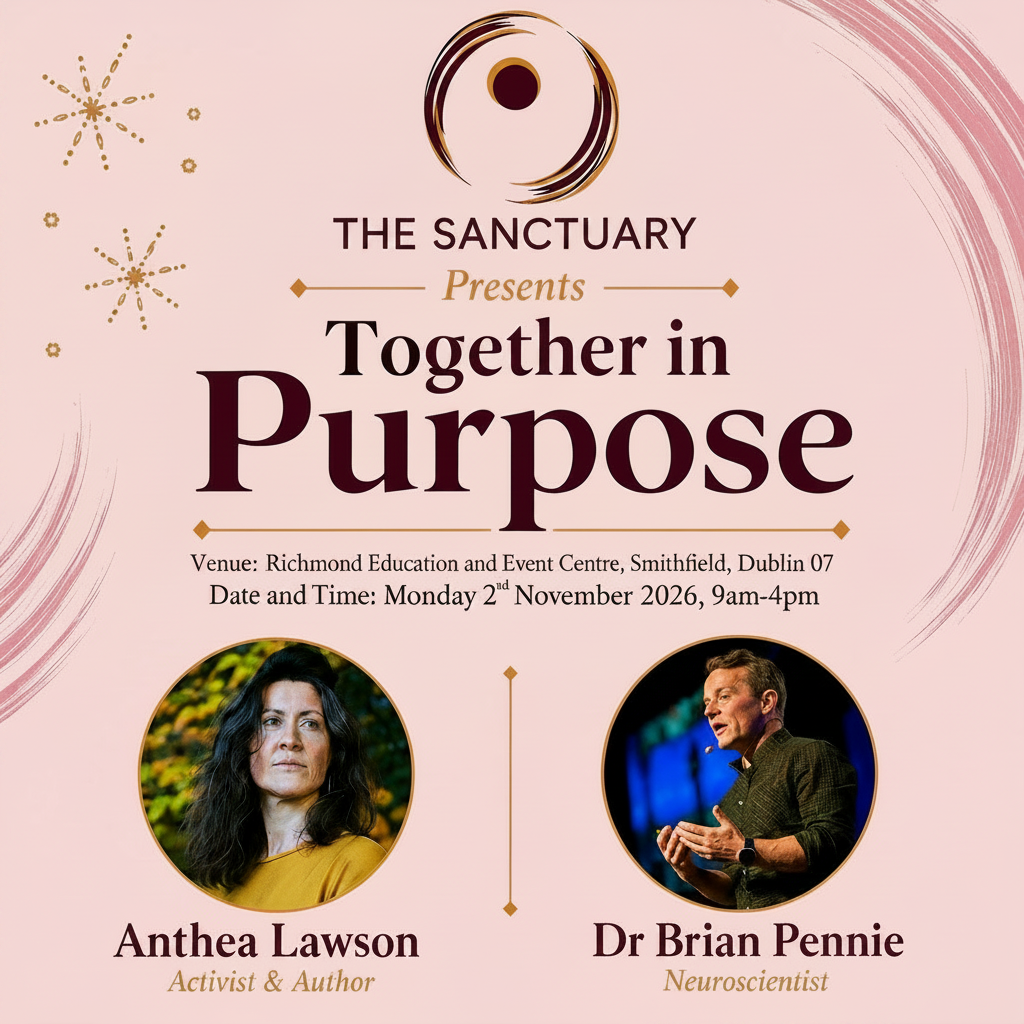
DFI member The Sanctuary is hosting an immersive day of workshops, lectures and mindful activities with activist and author Anthea Lawson and neuroscientist Dr Brian Pennie.
Date: Monday 2 November 2026, 9am to 4pm
Venue: Richmond Education and Event Centre, Smithfield, Dublin 7.
About the conference
Inspired by the vision of The Sanctuary's founder Sister Stan, 'Nourishing Personal Growth for Greater Social Impact', this workshop-focused conference invites participants to explore growth as a catalyst for positive social change.
Guided by Anthea Lawson and Dr Brian Pennie, the day offers an interactive space for reflection, dialogue and action. Drawing on their experience in community development, social innovation and values-based leadership, they will support participants in examining how inner transformation can translate into meaningful contributions to society.
Through workshops, collaborative exercises and storytelling, attendees are encouraged to connect their personal aspirations with a broader sense of social responsibility, reimagining personal growth as a shared journey that recognises our collective potential to shape a more just and compassionate world.
The speakers
Anthea Lawson is an activist and writer who has worked on campaigns to shut down tax havens, prevent banks from facilitating corruption and environmental devastation, and control the arms trade.
At Global Witness, she launched a prize-winning campaign that changed the rules on secret company ownership, resulting in new laws in dozens of countries. She has published opinion pieces in the Financial Times, Guardian and New York Times, and essays in Dark Mountain, where she has also worked as an editor.
Dr Brian Pennie is a neuroscientist, resilience expert and speaker. Born in Dublin, he overcame a 15-year heroin addiction in 2013 and went on to study psychology, ultimately earning a PhD in Neuroscience from Trinity College Dublin.
Who it's for
The conference is aimed at people working in the charity and non-profit sectors, and anyone interested in the intersection between personal growth and societal change.
Find out more and book.
|
|
|
|
|
|
An Eye on Europe
|
|
|
Upcoming events for Ireland's Presidency of the Council of the European Union
|

|
Ireland assumed the Presidency of the Council of the European Union on 1 July 2026. The Council is one of the three main EU institutions, and its Presidency rotates every six months.
This means Ireland will chair all the relevant Council formations and technical bodies, such as the Education, Employment, and Social Affairs Council meetings of national ministers (EPSCO) and the Social Questions Working Party meetings, which usually discuss issues related to disability. Until the end of 2026, Ireland is therefore the most important point of contact for influencing the work of the Council.
Ireland will also oversee the remaining work on the Council's position regarding the next long-term EU budget, known as the Multiannual Financial Framework. Depending on how quickly the Parliament and the Council approve their respective positions, Ireland may also oversee the first interinstitutional negotiations on some files.
Presidency Priorities
The Irish Presidency has built its Programme around three priorities under the motto 'Strength with unity':
-
Competitiveness – fostering prosperity and wellbeing
-
Values – upholding the foundation of the European Union
-
Security – protecting citizens.
Encouragingly, the Presidency specifically mentions persons with disabilities in its programme, stating under the second priority that it will "champion the full participation of disabled people in Europe's social and economic life".
Some other relevant priorities include:
-
Digitalisation, including Artificial Intelligence and the protection of citizens (including children) online
-
Equality and the promotion of human rights, including women's rights, gender equality and the rights of LGBTIQ+ persons
-
Employment, supporting quality jobs within modern labour markets
-
Prevention and health innovation, including mental health
-
Democracy and the rule of law, including the European Democracy Shield and the EU Strategy for Civil Society
-
The EU's support to Ukraine and accession negotiations with Ukraine, Albania, Moldova and Montenegro.
Disability Advocacy
The European Disability Forum (EDF) is already in touch with the Irish Presidency and with its Irish member, the Disability Federation of Ireland, to ensure disability rights remain in focus. The two organisations will work closely together to plan disability-related events in Ireland in October, including an EDF Board meeting, a half-day conference on housing, and EDF will also draw up its regular Presidency Scorecard.
Relevant Events.
A full list of events is available on the Presidency website. The following is a selection relevant to our policy areas:
-
27–30 September: EU Youth Conference
-
6 October: High Level Conference on Non-Discrimination (LGBTIQ+ rights)
-
9–10 October: Inclusive Education – Shaping an Inclusive and Empowering Higher Education System
-
12–13 October: Unlocking Skills Mobility: The Role of European Transparency Tools to Drive the Skills Portability Initiative and Talent Mobility
-
13–14 October: Data in Motion: Connecting Care and Enabling Innovation through the European Health Data Space (EHDS)
-
15–16 October: AI in Science Summit 2026 (AIS26)
-
15 October: Resilient Europe: Mental Health as a Strategic Asset for Europe's Strength and Competitiveness
-
19 October: EPSCO Council meeting (in Luxembourg)
-
22–23 October: High Level Conference on Persons with Disabilities (more information to follow)
-
6 November: Empowering Europe's Regional Economies Through AI Skills
-
23 November: One Health in Action: Surveillance, Innovation and Resilient Systems
-
7 December: EPSCO Council meeting (in Brussels)
-
10–11 December: Conference on the Rule of Law.
We'll share more soon on other Presidency events DFI is involved in, including:
- civil spaces and social dialogue, held as part of the community and voluntary pillar
- a seminar on employment that we're co-hosting with RehabCare.
|
|
|
In the news: DFI and members making headlines
|

|
This segment shines a light on DFI and our members making waves in the media, locally and nationally.
Every month, we’ll highlight interviews, articles, and appearances that showcase the incredible work happening across our network. Whether it’s championing rights, sharing lived experience, or shaping policy, our members are leading the conversation, and we’re here to amplify it.
Our media scanning isn't perfect, so if you were in the media over the last month and don't see your segment here, send Tom a link and we'll include it next month!
Ability West
ADHD Ireland
Arthritis Ireland
Autism Support Louth and Meath
Bluestack
Chime
Cork Deaf Association
DEBRA Ireland
Dementia Services Information and Development Centre
Down Syndrome Ireland
Early Onset Parkinson’s Disease
Employability West Cork
Enable Ireland
Epilepsy Ireland
Family Carers Ireland
FASD Ireland
Galway Rural Development
Housing Association for Integrated Living (HAIL)
Irish Guide Dogs for The Blind
Irish Heart Foundation
Irish Kidney Association
Irish Lung Fibrosis Association
Irish Motor Neurone Disease Association
Irish Wheelchair Association
Muscular Dystrophy Ireland
Positive Futures
Special Olympics Ireland
Vision Ireland
Western Care Association Ireland
|
|
|
|
|
|
For more on all of the content featured in our newsletter see www.disability-federation.ie.
If you have been sent this newsletter by a colleague please click here to subscribe directly to receive your own copy of future issues.
|
|
|
|
|
|
Copyright © 2024 Disability Federation of Ireland, All rights reserved.
Disability Federation of Ireland (DFI) is the national support organisation for voluntary disability organisations in Ireland who provide services to people with disabilities and disabling conditions.
Disability Federation of Ireland, 2 Dublin Landings, North Wall Quay, Dublin 1, D01 V4A. Telephone: 01 4547978, Email: info@disability-federation.ie, Web: www.disability-federation.ie
Disability Federation of Ireland, is a company limited by guarantee not having share capital, registered in Dublin, Ireland with offices at 2 Dublin Landings, North Wall Quay, Dublin 1, D01 V4A3.
Registration Number 140948, CHY No 6177.
Click here to unsubscribe or to change your Subscription Preferences.
|


|
|
|
|
|


